

When people think of skincare, they often picture creams, serums, and masks. But glowing, youthful skin doesn’t start in your bathroom cabinet, it starts on your plate.
Among the most important nutrients for skin resilience are omega-3 fatty acids. These essential fats, found in fish oil, flaxseeds, chia, and algae, don’t just support brain and heart health, they also play a powerful role in keeping skin supple, elastic, and hydrated.
If you’ve ever struggled with dry, flaky skin, premature fine lines, or inflammatory conditions like acne or eczema, your omega-3 intake might be the missing link.
In this guide, we’ll dive into the science behind omega-3s and skin health, the best sources, how supplements compare to foods, and exactly how to build omega-3s into your daily routine for glowing skin.

What Are Omega-3 Fatty Acids?
Omega-3s are a family of polyunsaturated fatty acids that the body cannot produce on its own. They must come from diet or supplements.
The three main types are:
- ALA (Alpha-Linolenic Acid)
- Found in flaxseed, chia seeds, walnuts.
- Plant-based omega-3.
- Partially converted to EPA/DHA in the body, but conversion is inefficient (<10%).
- EPA (Eicosapentaenoic Acid)
- Found in fatty fish and algae.
- Anti-inflammatory powerhouse.
- Supports skin barrier and calms redness.
- DHA (Docosahexaenoic Acid)
- Found in fish and algae oil.
- Structural fat, vital for skin cell membranes.
- Improves elasticity and hydration.
👉 EPA + DHA are the most effective forms for skin health.

How Omega-3s Support Skin Elasticity
- Strengthening the Skin Barrier
- Omega-3s are incorporated into phospholipid bilayers of skin cells.
- This helps lock in moisture and reduce transepidermal water loss.
- Improving Elasticity
- DHA-rich membranes remain flexible.
- Elastic skin resists wrinkling and sagging.
- Reducing Inflammation
- EPA-derived molecules (resolvins, protectins) calm redness and irritation.
- Helps acne, rosacea, psoriasis, and eczema.
- Boosting Collagen Production
- Indirectly supports fibroblast activity.
- Prevents UV-induced collagen breakdown.
- Protecting Against UV Damage
- Omega-3s reduce sun-induced inflammation and DNA damage.
Scientific Evidence
- 2013 (Journal of Lipid Research): EPA supplementation reduced UV-induced immunosuppression and supported skin barrier integrity.
- 2017 (Experimental Dermatology): DHA improved skin elasticity and reduced wrinkle depth in animal studies.
- 2019 (Nutrients): Higher dietary intake of omega-3s correlated with lower rates of photoaging in women over 50.
- 2021 (British Journal of Dermatology): Fish oil supplementation improved eczema symptoms and reduced transepidermal water loss.
👉 The evidence is strong: omega-3s improve both skin structure and function.

Best Food Sources of Omega-3s
Fatty Fish (highest EPA/DHA):
- Salmon (1,800 mg per serving)
- Mackerel (2,000 mg)
- Sardines (1,200 mg)
- Anchovies (950 mg)
- Herring (1,700 mg)
Plant Sources (ALA):
- Flaxseeds (2,300 mg per tbsp)
- Chia seeds (2,400 mg per tbsp)
- Walnuts (2,500 mg per ¼ cup)
- Hemp seeds (1,000 mg per tbsp)
Algae:
- The only vegan source of DHA/EPA.
- Often used in supplements.
Omega-3 Supplements: Fish Oil vs Algae Oil
| Feature | Fish Oil | Algae Oil |
|---|---|---|
| EPA/DHA Content | High (varies by brand) | Moderate but sufficient |
| Source | Anchovies, sardines, mackerel | Microalgae |
| Sustainability | Overfishing concerns with some sources | More sustainable, vegan-friendly |
| Taste/Aftertaste | Fishy burps (can be reduced if enteric coated) | Neutral taste |
👉 Both are effective; algae oil is an excellent plant-based alternative.
How Much Omega-3 Do You Need for Skin?
- General health: 250–500 mg EPA + DHA daily.
- Skin & anti-aging benefits: 1,000–2,000 mg daily.
- Eczema/psoriasis support: up to 3,000 mg (doctor-supervised).
Supplements should always be taken with meals for better absorption.
Practical Omega-3 Skin Routine
Morning
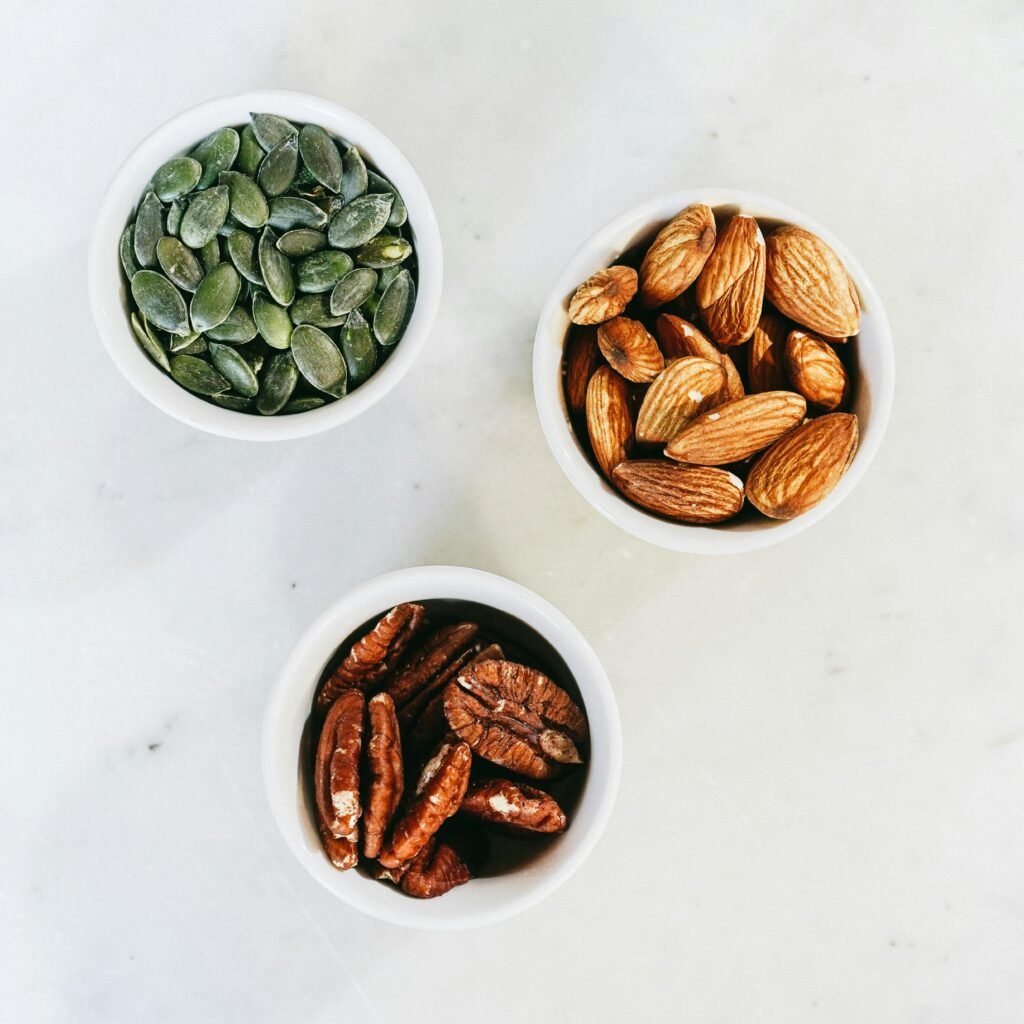
- Breakfast: Overnight oats with chia seeds, walnuts, and berries.
- Supplement: 1,000 mg fish oil (EPA + DHA).
Lunch
- Grilled salmon or tuna salad with leafy greens.
- Green tea (polyphenols + omega-3 synergy).
Evening
- Dinner: Quinoa with roasted veggies and hemp seeds.
- Optional: 500–1,000 mg algae oil capsule (if vegan).
Skincare Stack
- Vitamin C serum (AM) + sunscreen.
- Omega-3-rich facial oil (PM) with squalane for hydration.
Lifestyle Factors That Affect Omega-3s
- Too much omega-6 (vegetable oils) → creates imbalance. Aim for 1:4 ratio (omega-3:omega-6).
- Smoking & alcohol → accelerate lipid oxidation, reduce omega-3 effectiveness.
- Chronic stress → increases inflammation, raising omega-3 demand.
- Lack of sleep → reduces cell membrane repair overnight.
Myths vs Facts
Myth 1: Omega-3s make skin oily.
❌ They regulate sebum, often reducing breakouts.
Myth 2: Plant omega-3s are enough.
❌ ALA converts poorly to EPA/DHA; supplements or fish are best for skin.
Myth 3: You can get enough omega-3s from diet alone.
❌ Possible but difficult unless eating fatty fish 3–4x/week.
Myth 4: Omega-3 supplements cause weight gain.
❌ False. They are calorie-dense but beneficial fats, not fattening.
Myth 5: Only older people need omega-3s.
❌ Skin benefits start at any age. Prevention is key.
FAQs
Q: How long until omega-3s improve skin?
A: 8–12 weeks of consistent intake shows visible hydration and elasticity improvement.
Q: Can omega-3s help acne?
A: Yes, EPA reduces inflammation and regulates oil production.
Q: What’s better, fish oil or flaxseed oil?
A: Fish oil (EPA/DHA) is more effective; flax oil is supportive but less potent.
Q: Are high doses safe?
A: Up to 3 g/day is safe for most people, but consult your doctor.
Q: Can vegans get enough omega-3s?
A: Yes, through algae oil supplements.
Q: Do omega-3s work better with other nutrients?
A: Yes, combine with Vitamin C, E, and antioxidants for synergistic anti-aging.
Conclusion
Omega-3 fatty acids are more than heart-healthy fats, they’re essential building blocks for youthful, elastic, glowing skin. By strengthening cell membranes, reducing inflammation, and preventing UV damage, omega-3s tackle aging at its root.
Whether you get them from salmon, chia pudding, or algae oil supplements, consistency is key. With daily intake, you’ll see smoother texture, fewer fine lines, and a natural glow.


